Cartagena is a city that has been fortified more or less continuously for over two thousand years. The walls you see today are not one wall but several, from different centuries, in different states of repair.
The Punic Wall
The oldest surviving section dates from around 227 BC, built by the Carthaginians who founded the city. A preserved stretch is displayed inside an interpretation centre on the Cerro de la Concepción, along with a later crypt built into it. It is a small site but a rare one: very little Carthaginian construction survives anywhere in Spain.
Roman and Byzantine layers
Rome fortified the harbour and the hills after taking the city in 209 BC. In the sixth century the Byzantines held Cartagena as part of the province of Spania and reworked the defences again. Fragments of both turn up regularly during building works in the old town.
The Muralla de Carlos III
The wall most visitors actually see is much later. In the 18th century Cartagena became the capital of the Spanish Mediterranean naval department, and Charles III ordered a complete fortified perimeter around the city — bastions, gates, and a sea wall along the harbour. Long stretches of it survive, especially the Muralla del Mar beside the water.
The hill forts
The walls never worked alone. Cartagena's defence depended on the ring of hills around the bay, each with its own fort or battery: Galeras, Atalaya, Moros, San Julián. Several are visible from the castle terrace, and they explain the shape of the city better than any museum panel.
The Civil War underneath
The same geography made Cartagena a major naval base and a target during the Spanish Civil War. The city dug air raid shelters into the rock beneath the old town; one of them, on Calle Gisbert, is open to visitors and is a sobering counterpoint to the Roman ruins above.
Where to see the walls
The Muralla del Mar on the harbour front is the easiest. The Punic Wall centre is a short climb from the theatre. The Royal Arsenal wall runs beside the naval base and is best seen from the road that skirts it. Most guided routes take in at least two of the three.
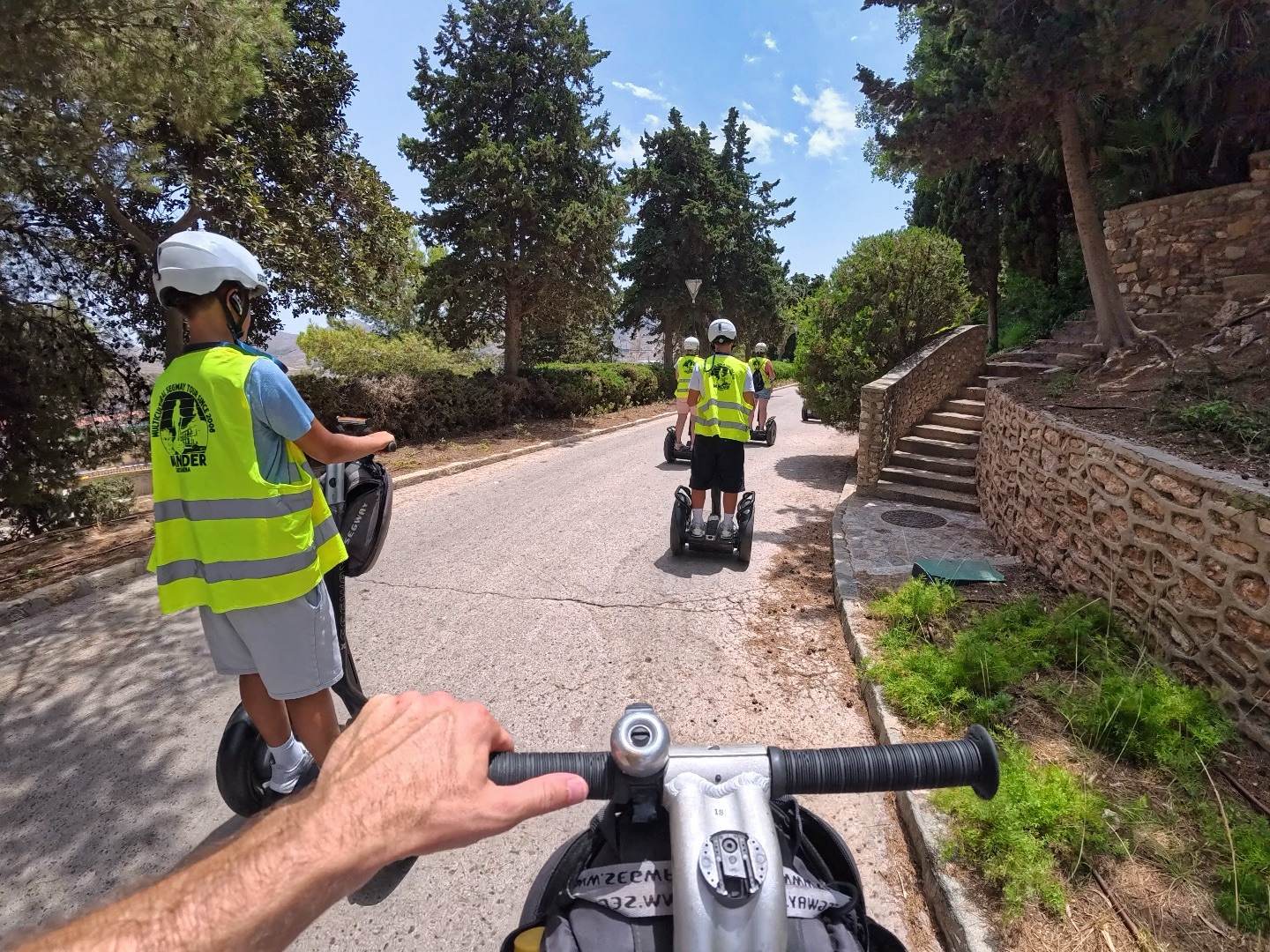
If you are coming into Cartagena on a cruise, our Segway tour is built around your ship's departure time — we will reply to your request as soon as possible.